Developing AI That Works for Healthcare
News
[July 2026] I started my independent research group at the Hertie Institute for AI in Brain Health, University of Tübingen. The group focuses on making foundation models for computational pathology interpretable and is funded by the BMFTR Zukunft eHealth program.
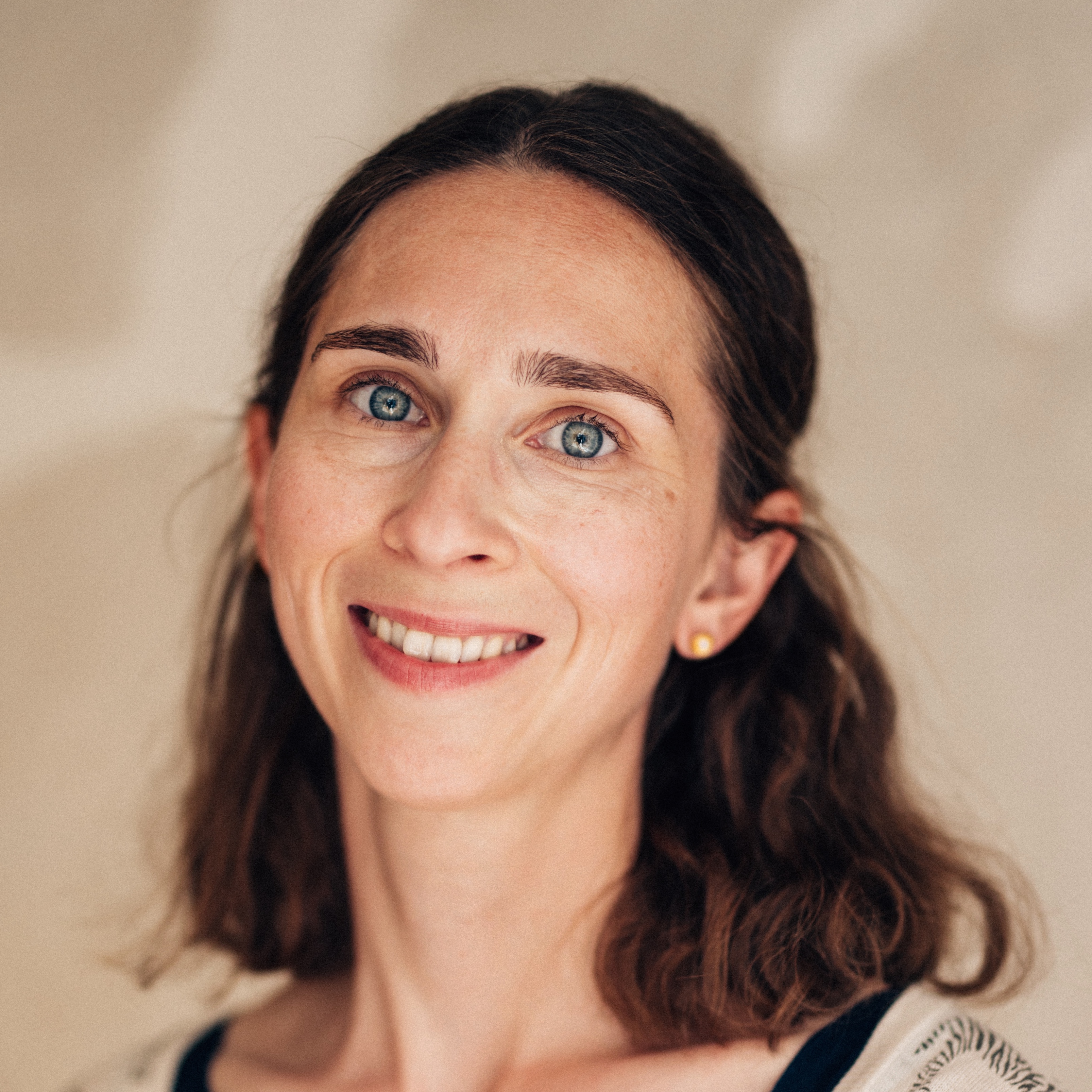
I am an independent research group leader at the Hertie Institute for AI in Brain Health, Faculty of Medicine, University of Tübingen, with a background in medicine and medical engineering. My research focuses on interpretable, trustworthy deep learning for medical imaging, spanning radiology and computational pathology, with the aim of making AI systems’ reasoning legible to the clinicians who rely on them.
Before moving to Tübingen, I was a postdoctoral research fellow in the lab of Prof Kun-Hsing Yu in the Department of Biomedical Informatics at Harvard Medical School (2024–2026) and in the lab of Prof William Lotter in the Department of Data Science at Dana-Farber Cancer Institute (2023–2024). I completed my PhD in Medical Engineering and Medical Physics in the Harvard-MIT Division of Health Sciences and Technology at MIT under Prof Jayashree Kalpathy-Cramer at the Martinos Center for Biomedical Imaging. I also hold an MD from Heidelberg University and a BS in Physics with a minor in Computer Science from Kiel University.
Research Areas
My group’s research is organized around three connected themes:
- Disease modeling from complex clinical and molecular data
Building machine learning models that can represent biological and clinical heterogeneity in diseases such as cancer. - Interpretability and trust in medical AI
Designing methods that help clinicians understand model behavior and identify when predictions are reliable. - Translation to healthcare practice
Creating AI systems that are tailored to clinical needs and can be evaluated for practical impact.
For a full list of publications, please see my Google Scholar profile.
Team
Team members will be announced soon. I am excited for my first postdoctoral researcher and PhD student to join the group in the coming months.
CV and Contact
You can download my current CV here: Download my CV.
I am always happy to connect about potential collaborations in medical AI, particularly in the oncology and pathology space.
Open Positions
My group at the Hertie Institute for AI in Brain Health, University of Tübingen, develops transparent and trustworthy AI for medical image analysis in an interdisciplinary setting. No prior experience with medical data is required; what matters most is openness to interdisciplinary research.
PhD Students
If you are interested in doing a PhD with me, please consider applying through IMPRS-IS. The application deadline for the 2027 cohort is November 15, 2026.
Master & Bachelor Students
I have multiple rotation and thesis projects available in interpretable ML for histopathology. The topics are flexible, potential directions include agentic systems to quantify pathologic concepts, interpretable attention maps for glioma diagnosis, and more. I am also happy to discuss your own ideas.
To get in touch, email k.hoebel@uni-tuebingen.de with the subject line “pathologically curious” and a few words about your research interests.